The event ends. Attendees leave. The platform goes quiet. And somewhere in a spreadsheet, someone is trying to piece together what actually happened, who showed up, what they engaged with, and whether any of it was worth the budget.
This is the design failure at the centre of most event technology. It was built for the day and only for the day.
The Gevme Event Intelligence Ecosystem was built for the full arc: the decisions that happen before an event is won, the operations that make it run, and the evidence that needs to outlive it. Launched in 2026 and co-created with the organisations shaping the meetings industry, it is the clearest articulation yet of what event tech should actually be.
Why “Platform” Was Never the Right Word
Every event has a lifecycle that most technology ignores.
Before the event happens at all, there are decisions being made. A city decides whether to bid for a major congress. A destination weighs the long-term value of hosting against the short-term cost. A convention bureau needs evidence that last year’s conference drove measurable economic activity before it can make the case for next year’s.
These decisions do not happen inside a registration form. They happen in boardrooms, in government briefings, in funding conversations and they depend on intelligence that most event platforms have never been designed to produce.
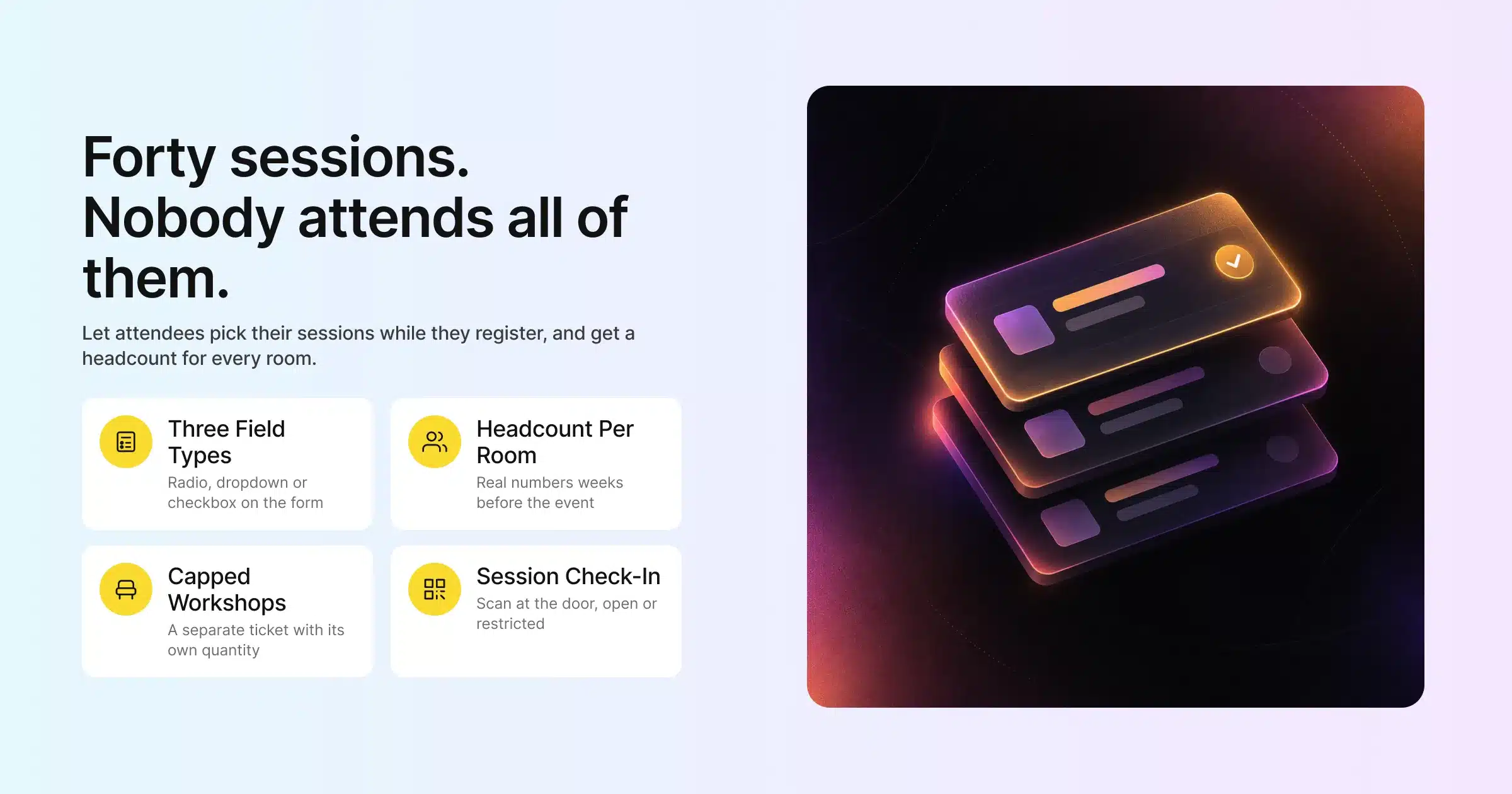
At the operational end, there is a different problem. The teams running events need tools that work under pressure, across modalities, in real time. Registration that handles complexity without friction. Onsite check-in that does not fail in the first ten minutes. Virtual engagement that connects remote attendees to the same data record as the in-person audience. Session scanning that feeds live dashboards, not next-week reports.
And then, after the event closes, there is the question nobody has a good answer to: how do you prove what this event actually achieved?
The Gevme Event Intelligence Ecosystem is organised around all three of these layers.
Three Layers. One Connected Architecture.
The ecosystem is built around what Gevme calls the full event lifecycle: Run, Host, and Prove.
The operational layer – Run the Event, is the platform event teams already know. Registration, onsite check-in, badge design and printing, virtual environments, mobile app, business matching, engagement tools, exhibitor and sponsor management, real-time data dashboards. Everything needed to plan, deliver, and capture what happens across every attendee touchpoint, before and during the event.
The commercial and hosting layer – Host the Event, supports destinations, venues, and industry bodies with the intelligence they need to win and shape better events. This is where bid intelligence, destination data, and event impact forecasting meet the operational platform, giving hosts a clearer view of what an event is worth before they commit to it.
The impact and advocacy layer – Prove the Event, is the newest and most strategically significant. This is where Gevme has invested the most deliberate effort in 2026, and it is where the IcebergHub partnership sits. Measuring impact. Communicating value. Building the evidence base that makes business events impossible to ignore in the decisions that matter.
Built With the Industry, Not Just For It
The word co-created is used carefully here, because it actually describes how this ecosystem came to exist.
Gevme’s partnerships with PCMA (Project SPARK), IAPCO, The Iceberg Charity Trust (IcebergHub), JMIC, and the Net Zero Carbon Events initiative are not sponsorship agreements. They are product relationships. The organisations shaping the meetings industry have had a direct role in defining what intelligence gaps the ecosystem addresses, what tools belong inside it, and how those tools need to work in practice.
Alexander Alles, Former Executive Director of JMIC, put it this way: “We partnered with Gevme to make complex industry information more accessible, tangible, and personalised, especially for small and medium-sized businesses that don’t have time to go through hundreds of pages.”
Paula Rowntree, Founder of The Business Events Network, describes the practical impact of Snapsight, Gevme’s live session intelligence tool, on attendee value: “I’m giving them not just access to the education they’re getting in that one stream that they’re physically able to get into, but content from every single stream.”
This is what being built with the industry actually produces: tools that solve problems the industry identified, not problems a product team imagined.
What This Means If You Are Evaluating Event Tech in 2026
If you are looking at event management platforms this year, the Gevme ecosystem changes the evaluation criteria.
The question is no longer whether a platform can handle your registration flow or run a hybrid event. Those are baseline expectations. The question is whether the platform you choose is built on an architecture that grows with the full ambition of your events programme, from the bid that wins the event, to the delivery that impresses the attendees, to the impact report that justifies doing it again next year.
Most platforms answer the first question. The Gevme Event Intelligence Ecosystem is built to answer all three.
Want to see the full ecosystem in context? Request a demo and we will show you how each layer connects.
Gevme is the creator of the Event Intelligence Ecosystem, the AI-powered platform built for the full lifecycle of the meetings industry. Trusted by the Singapore Fintech Festival, GovTech, Monetary Authority of Singapore, and global trade show operators.
FAQ’s
An event intelligence platform is a system that unifies data from across the entire event lifecycle, registration, onsite operations, virtual engagement, and post-event analysis, into a single, queryable record. Unlike standard event management software that handles specific operational tasks, an event intelligence platform is designed to generate insight at every stage: before the event (planning and forecasting), during (real-time operational data), and after (impact measurement and reporting).
Standard event management software is typically built around one part of the event lifecycle, registration, or check-in, or virtual delivery. The Gevme Event Intelligence Ecosystem spans the full arc: operational delivery for event planners, commercial and hosting intelligence for destinations and venues, and impact measurement and advocacy tools for associations and industry bodies. It also includes the IcebergHub partnership, which connects event data to the broader evidence base for business events’ societal and economic value.
Gevme’s ecosystem was co-created with major meetings industry organisations including PCMA (Project SPARK), IAPCO, The Iceberg Charity Trust (IcebergHub), JMIC, and the Net Zero Carbon Events initiative. These are not commercial partnerships, they are product relationships where the people running the industry have directly shaped what intelligence gaps the platform addresses and how its tools work in practice.
These are the three layers of the Gevme Event Intelligence Ecosystem. Run the Event covers the operational platform: registration, check-in, virtual engagement, mobile app, exhibitor management, and analytics. Host the Event supports destinations, venues, and convention bureaux with the intelligence to win and shape better events. Prove the Event is the impact and advocacy layer, measuring outcomes, communicating value, and building the evidence base that makes business events matter beyond the day itself.
Snapsight is Gevme’s live session intelligence tool. It analyses session content in real time and generates summaries, key takeaways, and curated insights for attendees. It expands the value of event content beyond the people physically present in a session, giving attendees access to insights from every track, not just the ones they attended, and enabling associations to repurpose content for knowledge transfer long after the event ends.
The ecosystem is designed for organisations across four roles: event planners and organisers who need unified operational and engagement data; destinations, venues, and suppliers who need commercial intelligence to win and measure events; associations and industry bodies who need to capture session intelligence and prove member value; and industry advocates and sustainability leaders who need to embed ESG measurement into event delivery and reporting.
Implementation timelines depend on the scale and complexity of the event programme. Most teams running single events go live within days on the registration and onsite modules. Full omnichannel deployment, including virtual, mobile app, and BI Dashboard, typically takes four to eight weeks depending on data migration requirements and SSO configuration. The ecosystem is designed to add value incrementally, so teams can start with the operational layer and expand into the intelligence and advocacy layers as their programme matures.