A system that works beautifully for a 300-person corporate gathering is not necessarily a system that will hold together when 8,000 people are registering simultaneously.
This is one of the most consistent problems in event technology: tools are evaluated at low load and deployed at high load. The gaps only become visible when they matter most.
Event management at scale is not a bigger version of event management for small events. It is a different problem, one that requires different architectural decisions, different integration depth, and a fundamentally different relationship between the event platform and the systems around it.
Where Scaling Actually Breaks
When event teams talk about scale, they usually mean volume, more attendees, more sessions, more data. But volume is only one dimension of the problem.
Scale breaks in three specific ways, and understanding all three is necessary to avoid them.
1. The Volume Problem: Systems That Cannot Handle Simultaneous Load
Early-bird registration opens. A promotional email goes to 50,000 subscribers. Fifteen hundred people hit the registration page within the first ten minutes.
For most event platforms, this is a stress test they were not designed to pass.
Form load times spike. Payment processing backs up. Session selection pages timeout. Some registrations go through. Others fail silently, the attendee thinks they are registered, but the record was never created.
This is not a hypothetical. It is a failure mode that event teams experience at real events, often without fully understanding what happened until post-event audits.
Gevme’s infrastructure is designed around elastic load handling. Registration capacity does not depend on a fixed server allocation, it scales with demand, so the moment your email campaign drives a spike, the system accommodates it. Your attendees do not feel the load. Your team does not get the support calls.
2. The Integration Problem: Systems That Work in Isolation
At small events, a standalone registration platform is enough. Attendee data lives in one place. Communications are managed manually. Reporting is a post-event spreadsheet export.
At scale, the event does not live in one system. It lives across:
- A CRM that holds attendee history and relationship data
- A marketing automation platform managing multi-touch communications
- A finance system that needs to reconcile registration revenue in real time
- An access control system with hardware that needs to know who is allowed where
- A mobile event app that attendees use before, during, and after the event
- Sponsor and exhibitor portals with their own data requirements
When these systems do not talk to each other or when they talk through slow, scheduled exports rather than real-time data flows the seams show.
A VIP is upgraded in the CRM but the access control system still sees them as a general delegate. Finance closes the books using yesterday’s registration data. The event app shows session availability that does not match the onsite reality.
None of these failures are catastrophic in isolation. Collectively, they define the attendee experience.
3. The Flexibility Problem: Systems That Cannot Adapt Under Pressure
Events do not hold still. Session formats change. Sponsor requirements evolve. A keynote speaker drops out 48 hours before the event and the session schedule has to be rebuilt in real time.
At small scale, these changes are handled manually. At large scale, every manual change is a multiplication of effort, updated across registration, the event website, the mobile app, attendee communications, and onsite systems simultaneously.
Systems that are not designed for rapid configuration under pressure force event teams to choose between moving fast and staying accurate. Neither option is good.
Why API Architecture Is the Answer to Event Management at Scale
An API, an Application Programming Interface is the mechanism by which software systems share data with each other in real time.
For event management at scale, API architecture is not a technical feature. It is the operational backbone.
Here is what API-first event management enables:
- Real-time data flows. When an attendee registers, that record is immediately available to every integrated system CRM, finance, access control, the event app, without a scheduled sync or a manual export.
- Two-way integration. Systems do not just receive data from the event platform. They can also push data to it. A CRM update to a VIP’s profile is reflected in the onsite check-in system within seconds.
- Custom workflow automation. Organisations with existing operational systems do not need to abandon them. APIs allow the event platform to fit into the broader technology ecosystem, rather than requiring everything to fit around it.
- Third-party tool flexibility. Best-in-class tools for email, payments, analytics, and CRM can connect to the event platform without custom development.
Gevme’s platform is built on an open API architecture, with documented endpoints that allow integration with virtually any enterprise system. Event teams or their IT partners can connect Gevme to Salesforce, Marketo, HubSpot, SAP, and custom internal systems without rebuilding their technology infrastructure around the event platform.
What Flexibility Looks Like in Practice
Flexibility in event technology is often discussed in abstract terms. Here is what it actually means for teams running events at scale.
Scenario 1: Late-stage attendee tier changes
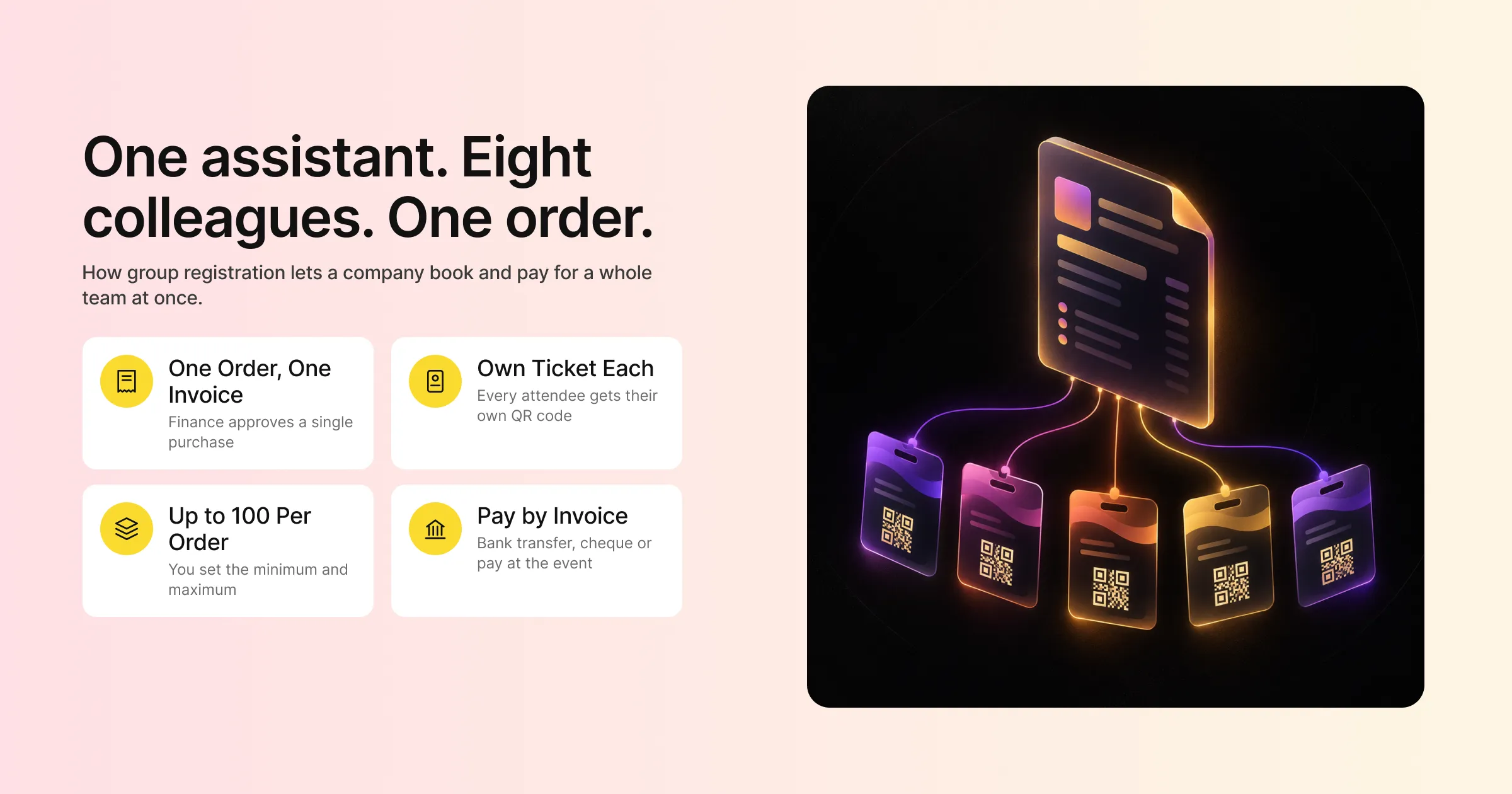
Three days before a 5,000-person conference, a major sponsor requests that 40 of their team members be upgraded to VIP delegate status. With a flexible, API-connected platform, this change is made once in the registration record and propagates automatically to access control, catering allocations, badge printing, and the event app. No manual update across five systems.
Scenario 2: Custom registration logic for complex audiences
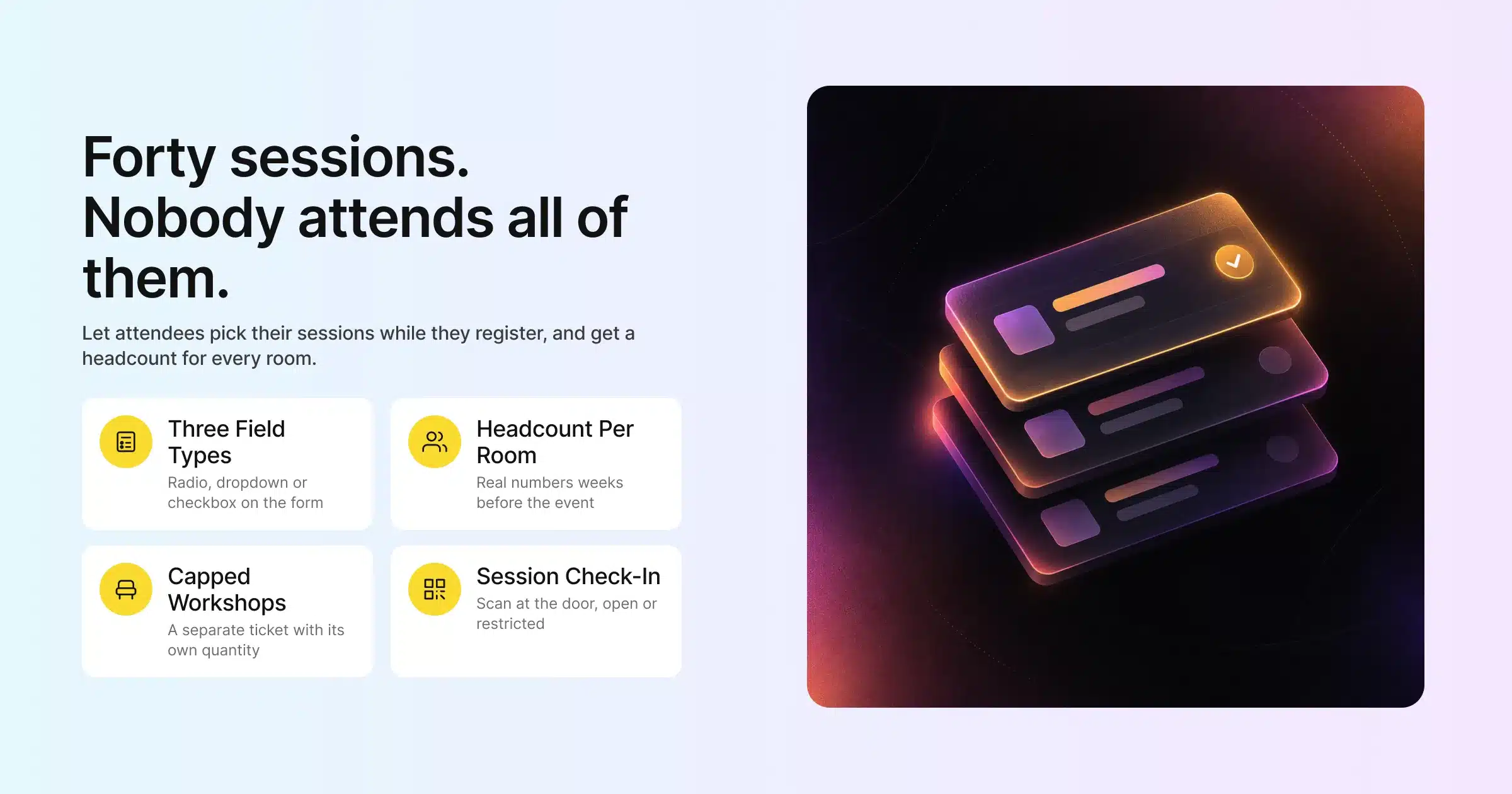
A global trade show has six distinct attendee types: buyers, sellers, press, government delegates, exhibitors, and speakers. Each type has different registration fields, different approval workflows, different access rules, and different communications sequences. A rigid registration platform forces compromises. A flexible one like Gevme handles each type as a distinct configuration within the same system.
Scenario 3: Integration with an existing enterprise CRM
A multinational corporation runs an annual customer summit and needs registration data to sync with Salesforce in real time, with custom field mapping that reflects their internal account structure. Gevme’s API enables this without custom middleware, the integration is configured, not coded from scratch.
The Cost of Inflexibility
Event teams that discover their platform cannot scale usually discover it at the worst possible time.
The registration form that times out during early-bird. The access control system that cannot talk to the updated guest list. The post-event report that takes three days to produce because the data is in five places.
Inflexibility is not just a technology problem. It is a team capacity problem. Every manual workaround, every spreadsheet, every manual export, every staff member updating three systems instead of one is time and attention that is not being spent on the event itself.
Gevme’s approach to event management at scale is to give event teams a platform that grows with them. One that handles 300 attendees and 30,000 attendees with the same operational reliability. One that integrates with the tools already in use, rather than replacing them. One whose configuration matches the event, rather than the other way around.
Because the system should work for the event. Not the other way around.
Running an event that has outgrown your current platform? Request a demo and see how Gevme’s API-first architecture supports events at any scale.
Gevme is an omnichannel event management platform that has powered global-scale events including the Singapore Fintech Festival, Tech Week Singapore, and government events for the Prime Minister’s Office of Singapore. Gevme is ISO 27001, ISO 27017, ISO 27018, and SOC2 Type 2 certified.