Why This Matters in 2026
While 2025 was the year planners experimented with AI, 2026 is the year it becomes an indispensable co-pilot.
-
63% of planners are already using AI to increase engagement.
-
Automation is projected to save the industry $15 billion in 2025 alone.
-
Teams using AI report up to 30% improvement in ROI.
The organizers without AI aren't just tired—they’re working twice as hard for half the results.
Why Generic AI (ChatGPT) Isn’t Enough
You could paste a LinkedIn profile into ChatGPT right now. But you’d still spend 20 minutes editing it. You’d fix the corporate jargon. You’d adjust the tone. You’d check the character count.
Generic AI treats a healthcare summit like a tech launch. It doesn't know your audience is C-suite, your theme is "Resilience," or your app has a 250-word limit.
You’re not saving time; you’re just shifting when the work happens.
The Shift: Purpose-Built AI
According to 2026 industry trends, the market is moving toward "event-specific AI." Here is the difference:
1. Content That Adapts Context
Instead of repeating the same blurb, an event-specific AI generates a formal version for the web, a punchy version for the app, and a hook for email—instantly tailored to your event’s tone.
2. Agendas That Sync Everywhere
When a speaker drops out 48 hours prior, you don’t update five different systems.
You update it once, and the website, app, and printed program sync automatically.
No version controls nightmares.
3. Analytics in Plain English
Instead of manually building slide decks, you ask: "Show me registration revenue by ticket type."
The system builds the dashboard for you.
4. Real-Time Personalization
At IBM’s AI Summit in Indonesia, real-time AI summarization drove 30–40% adoption rates among attendees.
That happens when AI understands the event context, not just the text.
The ROI of Sleep
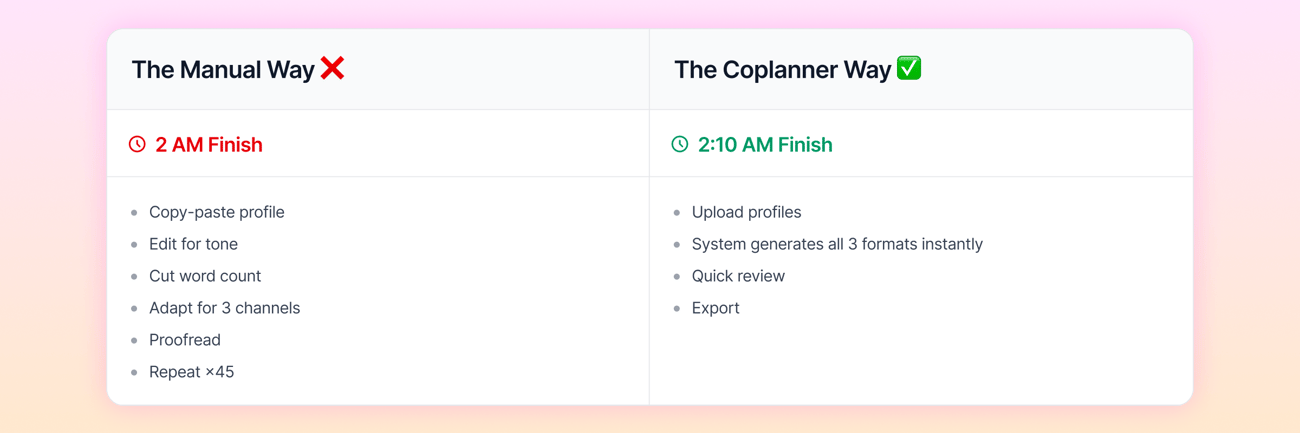
Here is the difference between the two workflows:
|